
13 good reasons to study in Germany


1. Little or No Tuition Fees
The majority of German public universities don't charge tuition fees. Although Baden-Wuerttemberg has re-applied fees for non-European students to study at public universities at €3,000, which is relatively low compared to the United States (average fees of $26,290) or the United Kingdom (starting from about £10,000 and going up to £38,000 or more for medical degrees), you can study for free in other states.
Students can avoid taking on huge loans by applying for scholarships offered by various German universities, mainly government-funded institutions. They have incredibly favorable programs for foreigners seeking the most affordable funding.
For Master's programs, be prepared to pay mandatory semester fees, usually under €300, to cover administrative costs.
2. Many Scholarships
Many scholarships are available for international undergraduate and graduate students: DAAD, Heinrich Böll Stiftung, Rosa Luxemburg Stiftung, Deutsche Bundesstiftung Umwelt, Erasmus Mundus, HHL Leipzig Graduate School of Management, etc.
For example, PostDocs from these four universities: Universidad de Costa Rica, Instituto Tecnológico de Costa Rica, Universidad Nacional de Costa Rica, and Universidad Estatal a Distancia can apply for doctoral and master's scholarships in German that last up to 4 years under the agreement between CONARE and DAAD. This type of scholarship allows holders to finance initial language courses, health insurance, as well as travel, research, and study costs.
Rosa-Luxemburg-Stiftung scholarship holders can receive up to €850 in addition to a monthly sum of €320 to pay for study fees. The coverage even includes health and nursing care insurance of up to €105. If you apply for an extension of studies, your scholarship will remain valid.
First-year students, graduates, and doctoral students who wish to apply to universities of applied sciences or arts may find the Heinrich Böll Foundation useful. Basic requirements for applicants include excellent academic performance, active social and political engagement, and an interest in the foundation's core values, which promote sustainability, ecology, human rights, democracy, justice, and self-determination.
Understanding the financial burden on international students when studying abroad, the Erasmus program offers €15 billion in coverage for EU students over seven years.
3. Many Educational Institutions with a Wide Range of Programs
In terms of university options and courses, Germany ranks at the top with the widest range of approximately 17,731 programs at more than 400 state-accredited higher education institutions.
More specifically, of over 400 German universities in the winter semester 2018/2019, 50.7% offer applied sciences courses, 12.2% are art schools, and 24.9% are universities.
In the winter semester one year earlier, international students in universities represented 14%, while this figure in universities of applied sciences was lower at 9.9%.
4. Wide Range of Courses Taught in English
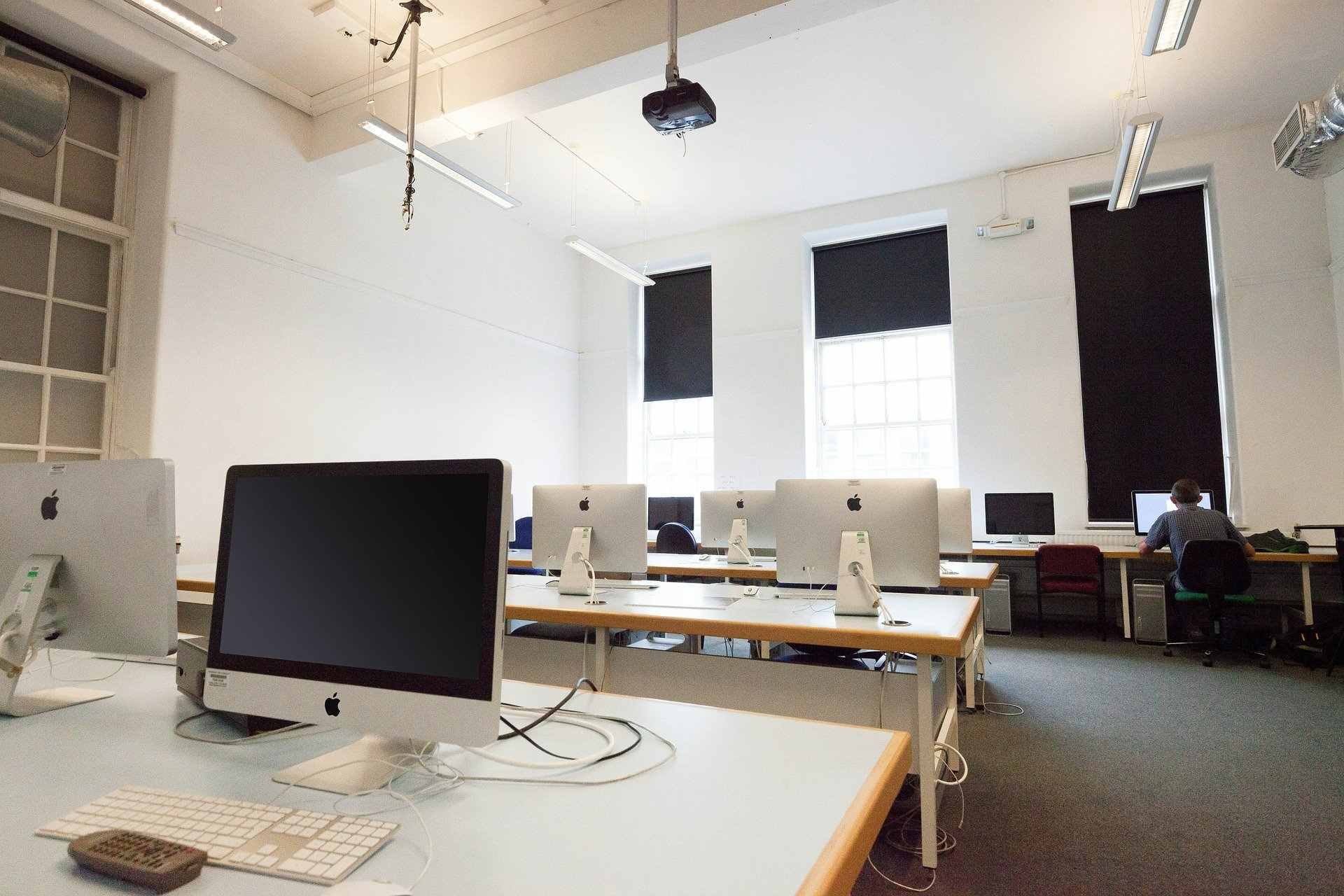
66 specialized fields across 215 German universities, spread across more than 154 cities, offering approximately 2,000 study programs taught in English.
Lack of German language proficiency shouldn't be an obstacle for international students, given that a growing number of German universities offer courses in English. About 835 degrees are available in English at 58 universities ranked among the top 1,000, including 726 master's programs and 109 bachelor's programs. You can still study and complete higher education in English.
Consequently, it's understandable why Germany ranks just behind the Netherlands in terms of the number of English-language degrees, making it an attractive destination for international students.
5. Exchange Semester or Internship Opportunities

German university institutions have a good network with universities around the world. Students have the opportunity to go to different countries for an exchange semester or an internship.
Moreover, thanks to technology-driven educational infrastructure, Germany can help students start preparing for their future. You can quickly access all modern educational aids and facilities on campus to benefit from a high-quality education.
German universities have established cooperation with educational institutions in more than 150 countries, with 5,400 partners both university and non-university.
For example, Carl von Ossietzky University of Oldenburg cooperates with the University of New England (Australia) in libraries and scientific conferences with an exchange of research programs, professors, and students. In Asia, Nanyang Polytechnic of Singapore exchanges interns in electrical and industrial engineering and precision mechanics with Esslingen University of Applied Sciences. In South America, students from Europa University Flensburg can enroll in exchange programs with Universidad Católica del Norte of Chile and many more. Potential candidates should have a degree in cultural studies, social sciences, and management.
6. Training at a World-Renowned Company
The practical part of studies plays an essential role in German university institutions. Universities and the degrees obtained are renowned worldwide for company-based teaching and deepening of knowledge.
Dual studies combine studying and working simultaneously, bringing students to apply their theoretical knowledge at their educational institutions. This will save time and money while offering a chance of early independence.
A dual degree program combines studies at a university / university of applied sciences / vocational academy with an apprenticeship or internship phases at a company.
In most dual study programs, theoretical and practical phases alternate in blocks of several weeks or months. For example, students spend the semester at the university and the semester breaks at the company. In other programs, the change happens every week or even daily. Students then work at the company from Monday to Wednesday and go to university on Thursday and Friday. A third alternative is upstream training. Here, students don't begin their vocational training and studies until after the first year of apprenticeship. Finally, a fourth option is distance or online learning, where students spend most of their studies at home.
7. Low Graduate Unemployment
In 2018, there were approximately 185,000 unemployed people despite having a university degree; compared to the previous year, this number decreased by 8,000 (-4%). Among them, only 2.2% had studied at universities of applied sciences. This percentage is the lowest in the European continent for the period studied. It's easy for graduates of German universities to find employment given the excellent education system that enables students to acquire essential skills.

8. Reasonable Living Costs
Living costs in Germany are reasonable and affordable compared to other European countries (for example, the same item costs more in the Netherlands, France, Belgium, Austria, etc.). Students also get cheaper special tickets for public transportation as well as reduced admission to various institutions and buildings (e.g., theaters and museums). The cost of living in Germany is reasonable among popular destinations. International students don't have to worry about rent, food, and clothing costs as they're eligible for many concessions.
On average, a student pays €30, €168, and €42 for mobile phone costs, food, and clothing, not to mention rent, insurance, books, transportation, and spending for leisure activities. According to the 21st Social Survey of the German Students' Union, several expenses have increased, costing students an average of €918/month. Most of the expenses go toward rent, which has increased. Institute of German Economy Cologne (IW = Institut der Deutschen Wirtschaft Köln - Institute of the German Economy Cologne) published a current student housing price index as a reference.
9. Part-Time Work Opportunities for Students
As of August 2012, international students are allowed to work 120 full days or 240 half days per year and a maximum of 20 hours/week (compared to 10 hours/week in the Netherlands or Austria). The minimum wage in Germany in 2022 is €12 per hour, which allows many students to live and study without their family's help.
10. One of the Most Spoken Languages

Germany has the largest number of native speakers in the European Union, and German is an official language in seven countries (Germany, Austria, Switzerland, Belgium, Luxembourg, Liechtenstein, and South Tyrol in Italy).
There are 105 million native German speakers and 80 million non-native speakers. The number of German speakers ranks among the top ten in the world.
With an international ratio of 3 out of 5, you can be sure to be understood in many regions of the world.
Germany is located in the heart of Europe, influenced by the diverse surrounding ethnicities, making it a culturally rich and intriguing country.
11. A Beautiful Country
Germany has very vibrant cities, as well as beautiful beaches and mountain ranges. It's also located in the center of Europe and benefits from great natural beauty that can add to your living experience.
The world-renowned travel guide "Lonely Planet" published a forecast of the best travel destinations for next year. Like for the past nine years, Germany is featured in this year's publication as one of the ten most attractive global travel destinations, ranking second behind Sri Lanka in the new book "Lonely Planet's Best in Travel 2019." You can find all of Germany's attractive features in this book. One of them is the 100th anniversary of the creation of the Bauhaus, while the 30th anniversary of the fall of the Berlin Wall is also an important highlight.
Regarding the Bauhaus school of architecture and design, "For a year, the anniversary of this midwife of modernity — founded in Weimar in 1919 and after a peak in Dessau, practically banned in Berlin by the Nazis in 1933 — was celebrated," the book states. The educational institution launched an artistic movement that has had a great effect on the world to this day.
In 2018, Hamburg ranked fourth among the best cities while Bavaria finished eighth two years ago. In 2010, Germany was second after El Salvador.
12. Schengen Visa

As an international student with a German Schengen visa, you're authorized to travel to 25 other Schengen countries (Austria, Belgium, Czech Republic, Denmark, Estonia, Finland, France, Greece, Hungary, Iceland, Italy, Latvia, Liechtenstein, Lithuania, Luxembourg, Malta, Netherlands, Norway, Poland, Portugal, Slovakia, Slovenia, Spain, Sweden, Switzerland) and a few other regions (Monaco, San Marino, and Vatican City).
There are 19 other countries that are not part of the Schengen area but allow foreign nationals from other non-Schengen countries to enter and stay on their territory, solely by presenting a valid multiple-entry Schengen visa (Albania, Antigua and Barbuda, Belarus, Bosnia and Herzegovina, Bulgaria, Colombia, Croatia, Cyprus, Georgia, Gibraltar, Kosovo, Macedonia, Mexico, Montenegro, Romania, Sao Tome and Principe, Serbia, Turkey).
13. Political Stability and Security
Germany ranked 22nd and scored 1,547 points in the Global Peace Index.
According to US News, Germany ranks fourth overall, fourth in terms of power, tenth in quality of life, eleventh in cultural influence, and twelfth in citizenship.
As a land of security and peace, Germany's residents can enjoy the greatest freedom thanks to efficient administration and a strict system of rules and regulations.
Preparing to study in Germany?
Secure your official blocked account and student health insurance in one official, fast package approved by German authorities.